
Shape the future of Tech!Subscribe to our newsletter
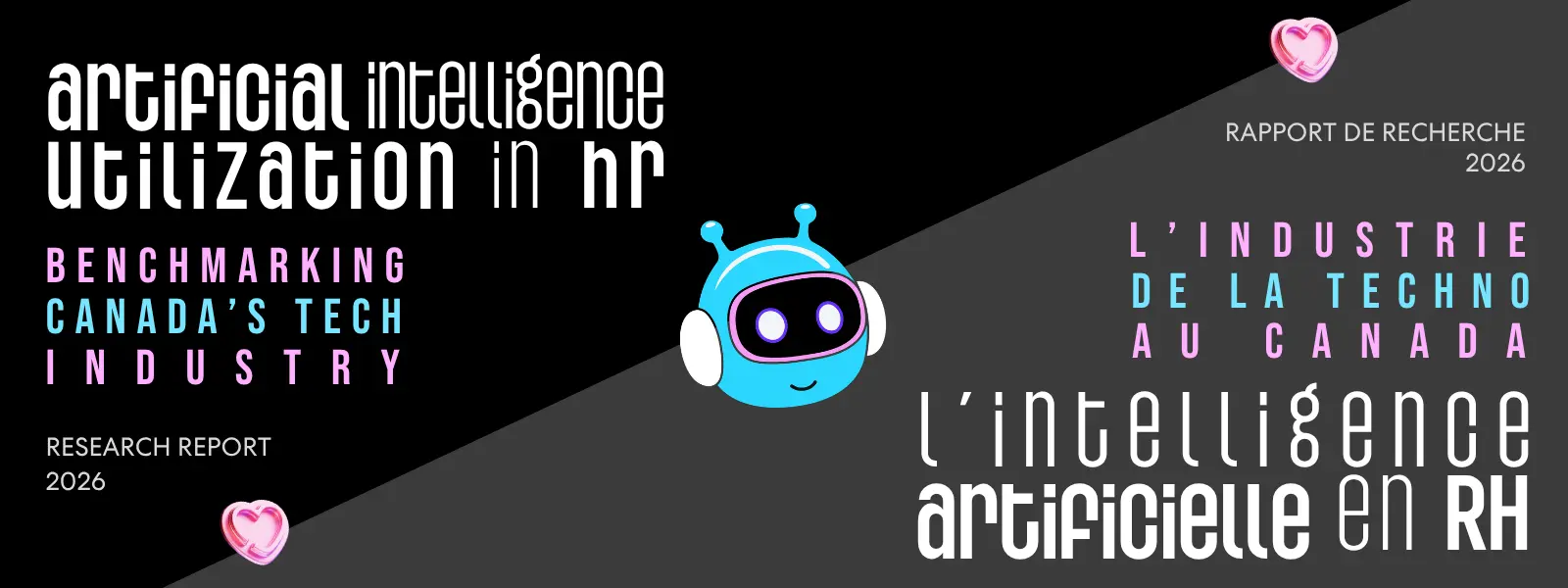
Montreal, QC - June 2026 | Today, national nonprofit QueerTech released the first report of its kind in Canada to examine the country’s readiness to implement, manage, and govern responsible artificial intelligence (AI) across human resources functions within the national technology industry. Supported by Women and Gender Equality Canada (WAGE), the AI Utilization in HR - Benchmarking Canada’s Tech Industry: Inclusive Practices & 2SLGBTQI+ Outcomes Research Report measures inclusive AI utilization, with a particular focus on 2SLGBTQI+ professional realities.
The report benchmarks current industry approaches to the use of responsible AI systems across people teams, explores disparities between reported priorities and in-practice proficiency in responsible practices, identifies critical gaps, and highlights opportunities to advance more equitable AI practices across the Canadian tech industry.
The first study associated with inclusive AI practices was the Inclusive AI Development: Responsible Practices & 2SLGBTQI+ Outcomes Research Report, originally published by QueerTech in April of 2026. In that study, alarming gaps were identified relating to perceived priority and proficiency of inclusive development and deployment practices; with 97% of tech companies reporting inclusive systems development as a high priority, despite less than half of the same companies believing their AI products meet the needs of 2SLGBTQI+ users.
This follow-up study - AI Utilization in HR - is a natural progression of these first findings; aiming to identify the true impact of irresponsible, exclusive artificial intelligence systems after they have been deployed, particularly in high-risk business functions, like Human Resources and people teams. Considered together, both research initiatives confirm a dangerous trajectory: the risk of harm caused by irresponsible, under-informed artificial intelligence systems is neither reduced nor neutralized post-deployment. Instead, it evolves and compounds, becoming decentralized in both governance and risk type; ultimately turning mitigation efforts into an isolated, moving target.
A. AI USE IN HUMAN RESOURCES FUNCTIONS ACROSS THE TECH SECTOR
61% of Canadian tech companies currently fully automate at least some Human Resources decisions using AI. [Full Automation, in this context, means Automated Decisions Without Human Oversight].
89% of HR professionals are concerned about potential bias in AI-guided training, assessment, and wellbeing tools. Nearly half are most concerned about accuracy and reliability (in AI-powered tools, for any HR function).
91% of Canadian tech companies currently use AI (with or without human oversight) in any HR function. [Over 50% in specific Hiring Functions, Nearly 60% in specific Employee Monitoring & Management Functions (with overlap and redundancies removed to calculate total use).]
By 2029, 43% of Canadian tech companies will use AI for Automated Termination & Offboarding Functions. [As reported by HR Professionals, when asked Top Areas for AI Tool Expansion in HR Functions within 2-3 years.]
B. DISPARITY: 2SLGBTQI+ HIRING, SUPPORT & AWARENESS
62% of HR professionals are very confident in their knowledge of Inclusive Hiring Processes, yet only 51% of Canadian tech companies report having comprehensive policies that address queer representation.
63% of HR professionals are very confident in their knowledge of designing policies to support queer employees, yet less than 46% of Canadian tech companies have the following: Same-Sex Partner Benefits, Gender-Affirming Care Coverage, Chosen Family Care Leave, or Surrogacy/Adoption Support.
58% of HR professionals are very confident in their knowledge of building allyship and awareness across teams/managers. Yet, 80% of these professionals believe 2SLGBTQI+ people are well represented at their workplace, and 86% believe queer people at their workplace are out/comfortable being out.
59% of HR professionals are very confident in their knowledge of 2SLGBTQI+ concepts & terminology, yet nearly all (87%) of these professionals expressed a need for 2SLGBTQI+-specific tools, resources & training material. [Top Reported Barriers to Improved Queer Inclusion: Lack of Awareness of 2SLGBTQI+ Issues, Difficulty Collecting 2SLGBTQI+ Identity Data, Difficulty Creating Representative Policies.]
During this project, QueerTech and our research partners encountered a common challenge in 2SLGBTQI+ advancement research: 10% of responses submitted by Canadian technology companies were homophobic, transphobic, or otherwise queerphobic. This reflects the disproportionate burden placed on queer advancement organizations, which must not only collect critical missing data shaped by discrimination, but also absorb the added costs of community protection, capacity, and data verification. Increased hate and ignorance in broader public surveying is a key problem statement in the use case for inclusive AI. These comments did not come from bots, but from leaders across Canada’s technology sector shaping our daily technologies.
“Our goal with this research is to give Canada’s tech sector a clear baseline for where we stand - and the results show we have significant work to do. True innovation requires responsible systems implementation, monitoring and governance. If we do not actively audit and manage the AI systems dictating who gets hired, fired or forgotten, we risk automating discrimination at scale,” said Naoufel Testaouni, Co-Founder and CEO of QueerTech. “We are calling on People Teams and tech executives nationwide to use this data to bridge the gap between intent and impact. These findings are further evidence that Canada - and our national innovation economy - cannot afford the cost of exclusion, or irresponsible technologies.”
In 2026, Canada’s technology industry is showing concerning trends in the responsible, inclusive use of systems across Human Resources functions. Reported corporate confidence levels among HR professionals stand in stark contrast to the realities across tech workplaces: missing policies that address queer realities, a systemic absence of informed benefits, a critical lack of practical knowledge/expertise surrounding identity-based needs and supporting HR tools, and rapid AI automation across hiring functions, benefit allocation, policy creation, employee monitoring, and termination. Overt hate remains a reality across our society. Increasingly, these harmful views are being expressed through formal workplace information-gathering channels, with ten percent of study responses found to be queerphobic in tone. Considered together, these findings are profound. They expose a critical paradox: while Human Resources professionals drastically overestimate their priority and proficiency relating to inclusion, they are simultaneously displaying (and reinforcing) the exact same levels of cultural exclusion previously documented within technical Product and Development teams; a sub-section of the tech workforce widely believed to be far more exclusive than People Teams.
Canada’s AI future will be defined by what we choose to normalize and incentivize now across its full lifecycle; from design and deployment, to utilization and governance. For Canadian policy makers, that means building the legal, institutional, technical, and educational conditions that make inclusive, responsible development the price of entry for those who pose to benefit from these exponentially powerful technologies. Ultimately, Canada must define the type of innovation we are proud to stand behind, and clearly identify the threshold below which tech organizations become a liability to long-term competitiveness, and public trust.
Access The Research: AI Utilization in HR: Inclusive Practices & 2SLGBTQI+ Outcomes
Partner with QueerTech: Organizations interested in partnering with QueerTech for future QT AI initiatives are invited to contact AJ Stewart, QueerTech’s Partnerships Manager, at aj.stewart@queertech.org.
-30-
Media Requests: media@queertech.org (Lauren Hicks)
About QueerTech: QueerTech is a national nonprofit advancing 2SLGBTQI+ talent, entrepreneurship, and inclusive technology across Canada’s tech ecosystem. Through community-led programming, original research, strategic partnerships, and actionable inclusion tools, QueerTech builds pathways into tech and helps shape a more responsible and equitable technology industry. The organization is also a national leader in responsible technology advocacy and progressive 2SLGBTQI+ equity and inclusion policy facilitation.